From Reporting to Control: The Evolution of Project Intelligence
Author: Muhammad Amer Chaudhry
For decades, project controls relied heavily on periodic reporting—weekly updates, monthly dashboards, and retrospective performance summaries. While these reports documented progress, they rarely enabled control. By the time issues became visible, corrective options were limited, expensive, or politically constrained.
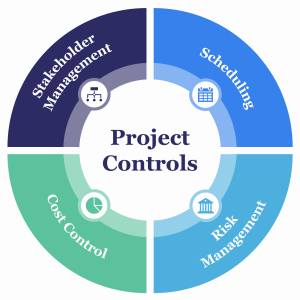
Project Controls Analytics represents a fundamental shift from descriptive reporting to analytical control. It integrates schedule logic, cost performance, risk exposure, and trend behavior into a unified analytical ecosystem. Instead of asking “What happened?”, analytics-driven controls ask:
- Why did it happen?
- What is the impact trajectory?
- What decisions can alter the outcome?
A critical distinction lies in signal versus noise. Many projects generate thousands of data points, yet fail to detect early warning signals such as:
- Progressive erosion of total float
- Divergence between physical progress and earned value
- Repeated forecast optimism bias
Advanced analytics highlights these patterns early—often months before traditional reports raise alarms.
Organizations that adopt Project Controls Analytics achieve measurable improvements:
- Reduced forecast volatility
- Earlier intervention windows
- Stronger governance credibility
Ultimately, project success is no longer about producing better reports—it is about establishing analytical control over uncertainty.