Risk & Forecasting Analytics Turning Uncertainty into Quantifiable Insight
Author: Muhammad Amer Chaudhry
Uncertainty is an inherent property of large-scale projects. Failure rarely stems from the existence of uncertainty itself, but rather from the failure to quantify and manage it.
Traditional risk registers are often “document graveyards”—static lists of potential events that rarely account for systemic impact. When risk is treated as a checklist rather than a data stream, contingency budgets are set arbitrarily, and forecasts remain dangerously deterministic.
To move beyond “gut-feel” management, organizations must adopt Risk & Forecasting Analytics, introducing probabilistic thinking into the core of project controls.
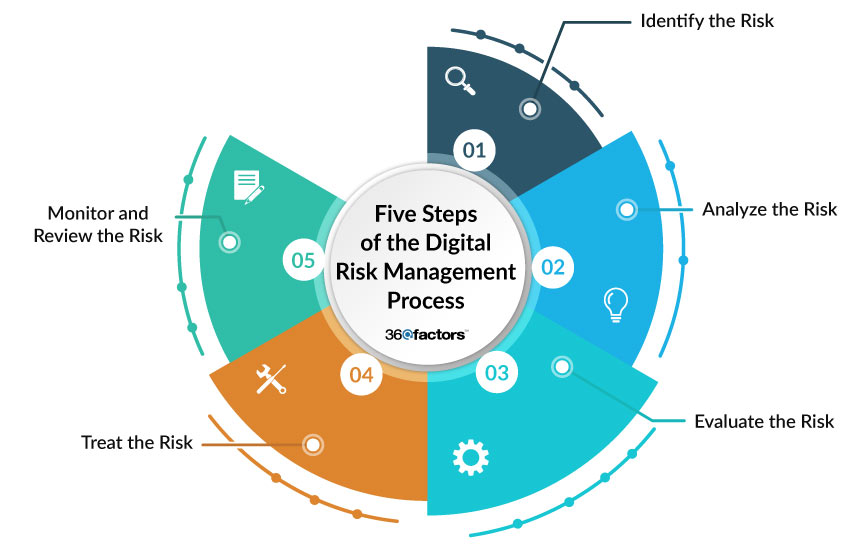
The Shift from Deterministic to Probabilistic Modeling
Most project managers ask, “When will this finish?” and expect a single date. Risk analytics shifts that question to, “What is our confidence level in finishing by October 15th?”
By analyzing historical performance trends, schedule sensitivity, and cost exposure by activity, organizations can move toward Monte Carlo Simulations and Reference Class Forecasting (RCF). Instead of a single-point prediction, leadership receives a “S-Curve” distribution of possible outcomes, allowing for data-backed decisions on reserve funding.
The Three Pillars of Predictive Control
To build an impressive risk analytics framework, focus on these three layers:
- Schedule Risk Analysis (SRA):Beyond the critical path, SRA identifies “near-critical” paths that may derail the project if minor risks materialize. This reveals the true sensitivity of the completion date.
- External Volatility Mapping:Modern analytics now integrate external data—such as global supply chain lead times, commodity price fluctuations, and labor market trends—to adjust forecasts in real-time.
- Human Bias Correction: Projects often suffer from “Optimism Bias.” Analytics provides an objective mirror, comparing current estimates against actual performance data from similar historical projects.
Strategic Outcomes: From Defense to Offense
Predictive analytics does not guarantee a specific outcome; it improves total project preparedness. When a project control system is risk-aware, it changes the internal dialogue from reactive firefighting to proactive steering:
- Confidence Level Quantification:Management can move from “hoping for the best” to stating, “We have an 85% confidence level in our current milestone targets.”
- Materiality Focus:Analytics highlights the 20% of risks that drive 80% of the potential delay, allowing leadership to ignore the “noise” and focus resources on critical threats.
- Scenario Stress-Testing: Organizations can run “What-If” simulations (e.g., What happens to our IRR if the steel price rises by 15%?) before the event occurs.
The Bottom Line
In the landscape of complex, multi-year projects, leadership confidence is not built on the illusion of certainty. It is built on a transparent, risk-adjusted understanding of the future. By quantifying the unknown, you transform risk from a liability into a competitive advantage.